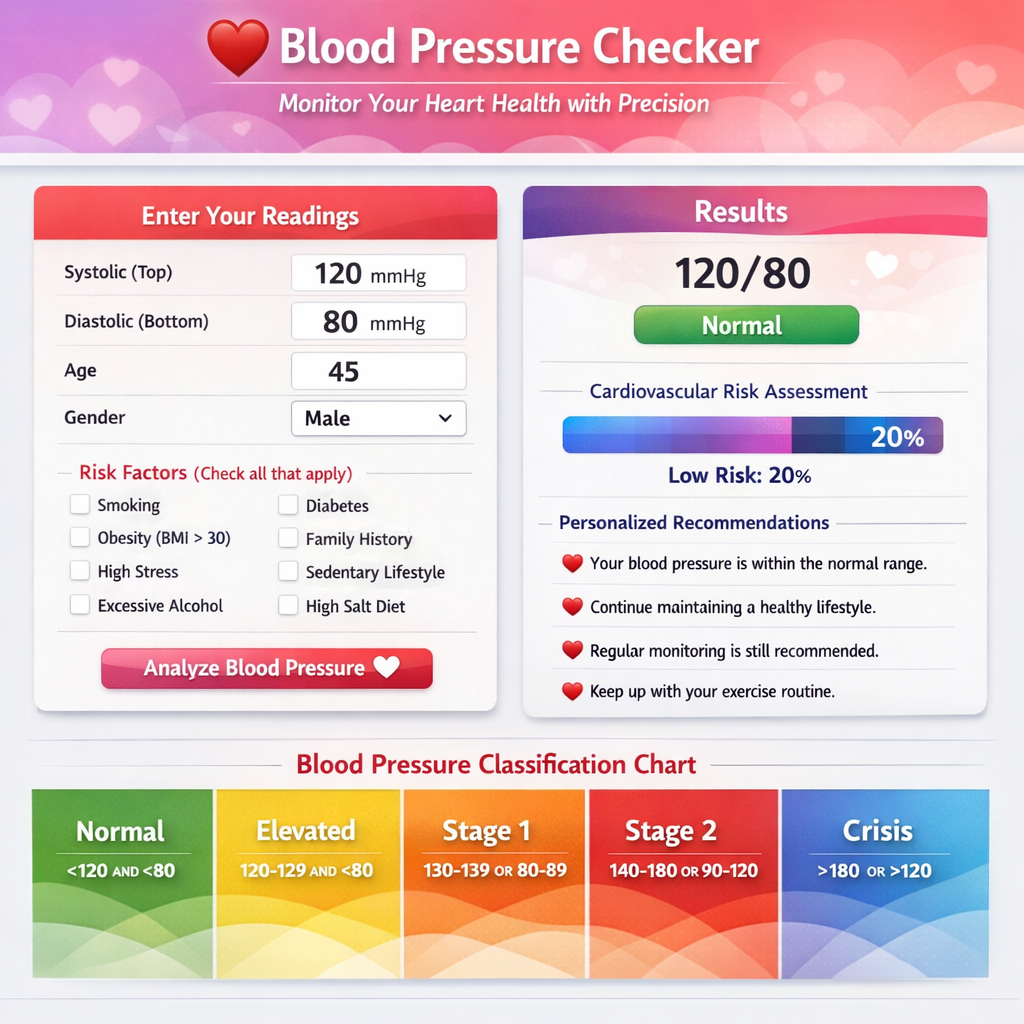
Blood Pressure Checker: Track your heart health easily! Get instant analysis on your readings and receive expert recommendations for a healthier lifestyle.
❤️ Blood Pressure Checker
Monitor Your Heart Health with Precision
Enter Your Readings
Risk Factors (Check all that apply)
Cardiovascular Risk Assessment
Personalized Recommendations
- Your blood pressure is within the normal range
- Continue maintaining a healthy lifestyle
- Regular monitoring is still recommended
- Keep up with your exercise routine
Blood Pressure Classification Chart
<120 AND <80
120-129 AND <80
130-139 OR 80-89
140-180 OR 90-120
>180 OR >120
Understanding Blood Pressure
🩺 What is Blood Pressure?
Blood pressure is the force of blood pushing against the walls of your arteries. It’s measured in millimeters of mercury (mmHg) and recorded as two numbers:
Systolic: Pressure when heart beats (top number)
Diastolic: Pressure when heart rests (bottom number)
📊 Why It Matters
High blood pressure (hypertension) is often called the “silent killer” because it typically has no symptoms but can lead to:
• Heart disease and stroke
• Kidney damage
• Vision loss
• Cognitive decline
⏰ When to Measure
For accurate readings:
• Measure at the same time daily
• Rest quietly for 5 minutes first
• Avoid caffeine, exercise, smoking 30 minutes prior
• Sit with back supported, feet flat
Warning Signs & Symptoms
While high blood pressure often has no symptoms, severe hypertension may cause:
Headaches
Especially in the morning
Dizziness
Feeling lightheaded or faint
Vision Changes
Blurred or double vision
Chest Pain
Pressure or tightness
Shortness of Breath
Difficulty breathing
Irregular Heartbeat
Palpitations or arrhythmia
Nosebleeds
Frequent or unexplained
Fatigue
Unusual tiredness
💡 Heart-Healthy Tips
Evidence-based strategies to maintain healthy blood pressure
DASH Diet
Follow the Dietary Approaches to Stop Hypertension diet: rich in fruits, vegetables, whole grains, and low-fat dairy. Limit sodium to 2,300mg daily (1,500mg for optimal results).
Regular Exercise
Aim for 150 minutes of moderate aerobic activity or 75 minutes of vigorous activity weekly. Even 10-minute walks can make a difference in your blood pressure.
Stress Management
Practice relaxation techniques: meditation, deep breathing, yoga, or tai chi. Chronic stress can contribute to high blood pressure through hormone release.
Limit Alcohol
Women: no more than 1 drink per day. Men: no more than 2 drinks per day. Excessive alcohol can raise blood pressure and reduce medication effectiveness.
Quit Smoking
Smoking damages blood vessel walls and speeds up artery hardening. Quitting can reduce heart disease risk by 50% within just a few years.
Monitor Regularly
Home monitoring helps track your progress and detect patterns. Keep a log of readings, medications, and symptoms to share with your healthcare provider.
Table of Contents
The Hidden Force That Shapes Your Health
Every second of every day, a powerful force is flowing through your body your blood pressure. Like an invisible river, it delivers oxygen and nutrients to every cell while carrying away waste products. Yet for millions of people worldwide, this vital force silently builds to dangerous levels, earning its nickname: “the silent killer.”
What Exactly Is Blood Pressure?
Imagine your arteries as flexible hoses carrying life giving blood throughout your body. Blood pressure is simply the force exerted by your circulating blood against the walls of these blood vessels. It’s measured in two numbers:
- Systolic Pressure (the top number): The pressure when your heart beats, pumping blood out
- Diastolic Pressure (the bottom number): The pressure when your heart rests between beats.
A normal reading is typically 120/80 mmHg (millimeters of mercury), but these numbers tell a much deeper story about your cardiovascular health.
🩺 The Alarming Global Statistics
According to the World Health Organization, 1.28 billion adults worldwide have hypertension, yet nearly half remain unaware of their condition. In the United States alone, the American Heart Association reports that 116 million adults nearly 1 in 2 have high blood pressure. What’s more concerning? Only about 1 in 4 have their condition under control.
These numbers aren’t just statistics they represent millions of families, careers cut short, and preventable tragedies.
📊 The New Blood Pressure Guidelines You Need to Know
In 2017, the American Heart Association and American College of Cardiology released updated guidelines that redefined what we consider “normal” blood pressure. Here’s the breakdown
| Category | Systolic (Top) | Diastolic (Bottom) |
|---|---|---|
| Normal | Less than 120 | Less than 80 |
| Elevated | 120-129 | Less than 80 |
| Stage 1 Hypertension | 130-139 | OR 80-89 |
| Stage 2 Hypertension | 140-180 | OR 90-120 |
| Hypertensive Crisis | Higher than 180 | OR Higher than 120 |
Key takeaway: What was once considered “pre-hypertension” (120-139/80-89) is now classified as elevated or Stage 1 hypertension. This shift reflects growing evidence that damage begins at lower levels than previously thought
🔍 Why High Blood Pressure Is So Dangerous
The Silent Damage Accumulator
High blood pressure is particularly insidious because it rarely causes noticeable symptoms until significant damage has occurred. Think of it as slowly turning up the pressure in a garden hose initially, everything seems fine, but eventually, the hose weakens and may burst.
The Cascade of Health Problems
Uncontrolled hypertension can lead to:
- Heart Disease: The heart must work harder, causing it to enlarge and weaken
- Stroke: Damaged arteries can burst or become blocked
- Kidney Failure: Reduced blood flow damages these vital filters
- Vision Loss: Damaged blood vessels in the eyes
- Cognitive Decline: Reduced blood flow to the brain
- Aneurysms: Weakened blood vessels can bulge and rupture.
🎯 The 8 Major Risk Factors You Should Know
Understanding your risk factors is the first step toward prevention:
1. Age
- Risk increases significantly after age 45 for men and 65 for women
- Over 90% of people will develop hypertension in their lifetime.
2. Family History
- Genetics plays a significant role
- Having a parent with hypertension doubles your risk
3. Obesity
- Each 2.2 pounds of excess weight can raise BP by 1 point
- Abdominal fat is particularly dangerous.
4. Physical Inactivity
- Sedentary lifestyle increases risk by 30-50%
- Regular exercise can lower BP by 5-8 mmHg.
5. Poor Diet
- High sodium intake (>2,300mg daily)
- Low potassium intake
- Excessive alcohol consumption.
6. Smoking
- Damages artery walls immediately
- Each cigarette raises BP temporarily.
7. Chronic Stress
- Triggers hormone release that increases BP
- Often leads to unhealthy coping mechanisms.
8. Sleep Disorders
- Sleep apnea is strongly linked to hypertension
- Less than 6 hours of sleep increases the risk
💡 10 Evidence Based Strategies to Lower Your Blood Pressure
1. Embrace the DASH Diet
The Dietary Approaches to Stop Hypertension (DASH) diet can lower BP by up to 14 mmHg. Focus on:
- Fruits and vegetables (9+ servings daily)
- Whole grains
- Lean proteins
- Low-fat dairy
- Nuts and seeds.
2. Reduce Sodium Dramatically
- Aim for under 1,500mg daily for optimal results
- Read labels carefully—hidden sodium is everywhere
- Use herbs and spices instead of salt.
3. Move Your Body Regularly
- 150 minutes of moderate exercise weekly
- Even 10-minute walks count
- Strength training adds additional benefits.
4. Achieve and Maintain a Healthy Weight
- Every 2.2 pounds lost can lower BP by 1 point
- Focus on sustainable changes, not quick fixes.
5. Limit Alcohol Intake
- Women: No more than 1 drink daily
- Men: No more than 2 drinks daily
- Consider eliminating alcohol completely.
6. Quit Smoking Immediately
- Benefits begin within 20 minutes of quitting
- Risk reduces to that of non-smokers within 5 years.
7. Manage Stress Effectively
- Practice meditation or deep breathing
- Consider yoga or tai chi
- Make time for hobbies and relaxation.
8. Prioritize Quality Sleep
- Aim for 7-9 hours nightly
- Treat sleep apnea if present
- Maintain a consistent sleep schedule
9. Monitor Your Blood Pressure
- Home monitoring improves control rates by 50%
- Keep a log of readings
- Share results with your healthcare provider.
10. Take Medications as Prescribed
- If lifestyle changes aren’t enough, don’t resist medication
- Take pills at the same time daily
- Never stop without consulting your doctor.
🏥 When to Seek Immediate Medical Attention
Hypertensive Crisis (BP >180/120) requires immediate attention. Seek emergency care if you experience:
- Severe headache
- Chest pain
- Shortness of breath
- Vision changes
- Numbness or weakness
- Difficulty speaking.
📈 The Power of Prevention
The good news? 80% of premature heart disease and stroke is preventable through lifestyle changes. By understanding your blood pressure and taking proactive steps, you’re not just adding years to your life you’re adding life to your years.
Remember: Every small change matters. A 5 point reduction in systolic blood pressure can reduce your risk of heart disease by 10% and stroke by 15%. That’s the power of informed action.
❤️ Your Heart Health Journey Starts Now
Your blood pressure is more than just numbers it’s a conversation with your body about your overall health. By listening to these messages and responding with evidence based strategies, you take control of your cardiovascular destiny.
Whether you’re just learning about blood pressure or working to manage existing hypertension, remember: your heart is counting on you. The decisions you make today echo through every beat of tomorrow.
References:
- American Heart Association (2023). “High Blood Pressure Facts”
- World Health Organization (2023). “Hypertension”
- Journal of the American College of Cardiology (2017). “2017 ACC/AHA Blood Pressure Guidelines”
- National Institutes of Health (2023). “Your Guide to Lowering Blood Pressure”.
This article is for informational purposes only Always consult with healthcare professionals for personalized medical advice and treatment.